
New Tesla Roadster: When the Dream Car Changes Before It Arrives
You can admire the Roadster’s engineering and still miss the car you thought was coming. The latest debate gets into something a spec sheet can’t settle: what makes a dream car worth wanting.
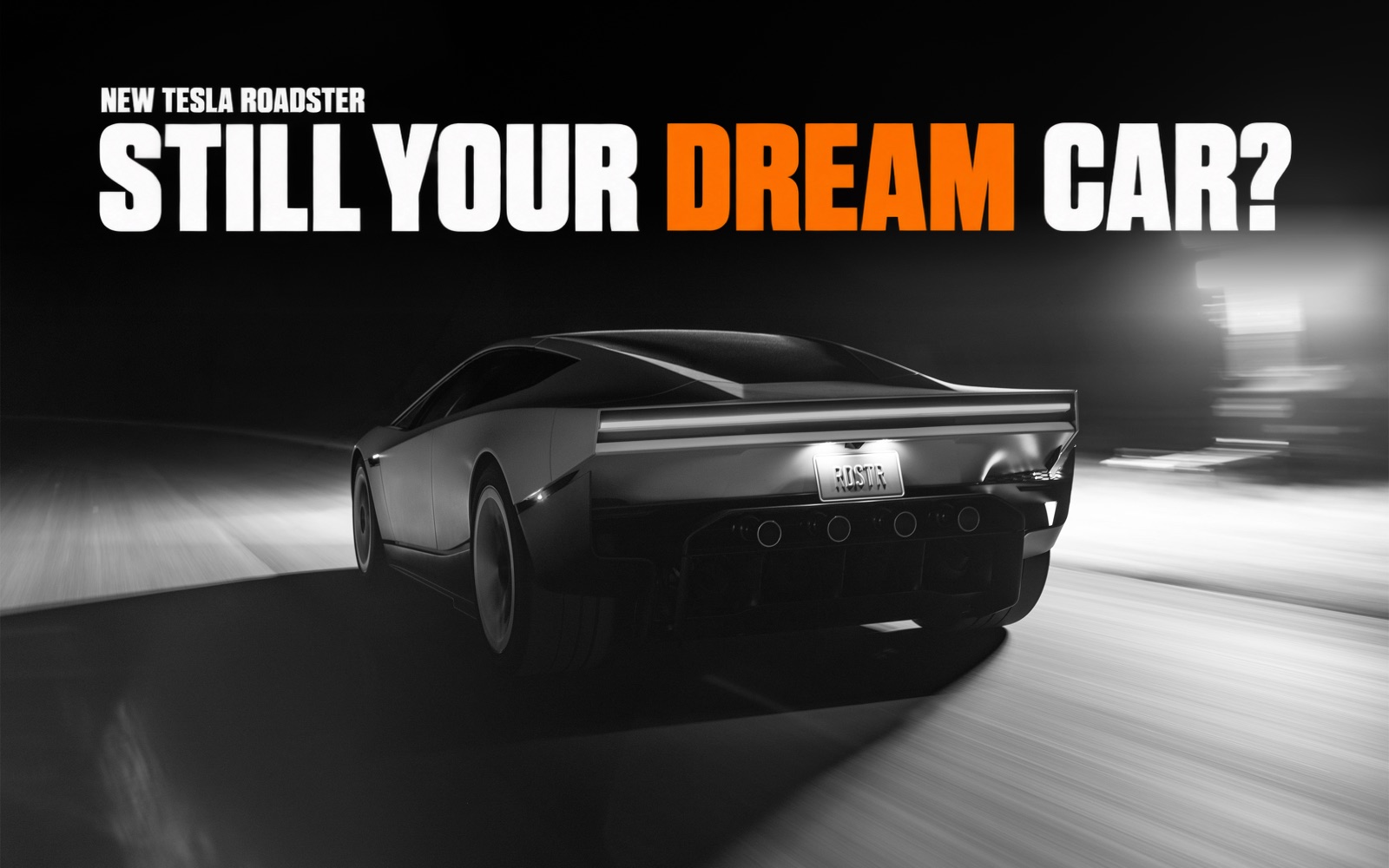
Courtesy of Tesla, Inc.
A car can get more outrageous and become less desirable to the person who wanted it.
That’s the interesting argument around the new Tesla Roadster. Beyond the clips, the engineering debates and the inevitable shouting, some enthusiasts are asking a quieter question: is this still the car they fell for?
Our take: the Roadster deserves room to be an ambitious halo car. But people who wanted a different kind of sports car have a fair complaint. More capability doesn’t automatically mean more appeal, especially when the dream changes before it reaches your driveway.
You can respect the engineering and still prefer the earlier idea.
Why the New Tesla Roadster Has Enthusiasts Split
We already covered what the Roadster demonstration does—and doesn’t—prove. This discussion has moved beyond whether the show was impressive.
In the r/cars discussion around Engineering Explained’s breakdown, commenters argue about production prospects, handling and whether the spectacular capabilities translate into a compelling car.
Meanwhile, a discussion in r/teslamotors makes the case for engineering ambition and spectacle having value of their own. Other participants want innovation they can actually buy and use.
Those are different standards of success.
Someone watching a wild demonstration might judge it as a brilliant piece of engineering theater. Someone who pictured owning the car might judge it against the weekends they imagined spending behind the wheel. Neither reaction requires misunderstanding the other.
A Halo Car Is Allowed to Be Ridiculous
Demanding everyday practicality from every performance project would make car culture painfully dull.
A halo car exists partly to stretch a company’s imagination and give enthusiasts something to argue about. The attraction can be the engineering itself: unusual solutions, ambitious targets and a willingness to build something that makes sensible people shake their heads.
There’s a legitimate appeal there. We understand spending time staring at a machine because somebody attempted something wonderfully unnecessary.
And enthusiasm doesn’t require a purchase order. You can love a race car you’ll never drive or a custom build that would be miserable on your commute. Admiration is its own reason to pay attention.
The strongest defense of the Roadster is that it doesn’t owe every enthusiast the same experience. A deliberately extreme machine can succeed on its own terms.
Where that defense gets weaker is when it dismisses everyone who wanted the earlier proposition.
Missing the Earlier Car Isn’t Being Against Progress
A TeslaLounge discussion about the redesign captures that frustration. The original poster acknowledges the functional intent of the new design while saying they prefer the earlier appearance. In the comments, they identify themselves as a reservation holder and say they cancelled because they dislike the redesign.
That account is unverified. It does not establish a wave of cancellations or tell us what most reservation holders think.
It does illustrate a reasonable distinction: understanding why a design changed doesn’t obligate you to like the result.
Buying a sports car is rarely a purely mathematical decision. The shape matters. The atmosphere matters. So does the kind of driving you imagine doing.
Think about your own project car. You could keep adding power, grip and equipment until it became objectively more capable at a particular job. Somewhere along the way, it might stop being the car you enjoyed taking out.
That isn’t an argument against development. It’s a reminder to keep asking what the development is for.
Performance, Thrust and Rocket Aren’t Interchangeable
The Tesla Roadster redesign debate also gets muddied when every version becomes the same imaginary vehicle.
Tesla’s own Roadster page describes distinct configurations. These are manufacturer descriptions, not our verification of finished customer cars.
| Configuration | Seats | Main distinction | Tesla’s stated positioning |
|---|---|---|---|
| Performance | 2 | Active aerodynamics and suction system | Road ready; by reservation |
| Thrust | 2 | Adds rear cold-gas thrusters | Race ready; limited release |
| Rocket | 1 | Thrusters around the vehicle | Invitation only; not approved for public-road use |
Tesla attributes an under-one-second 0–60 mph claim to Thrust. We have not independently verified that performance.
For anyone comparing Tesla Roadster Performance vs Rocket, the useful question is which configuration matches their intended use. The most extreme version cannot stand in for the entire range.
Equally, the existence of a road-oriented configuration doesn’t settle whether somebody likes its design or wants the ownership experience it offers.
The Driving Experience Still Has to Earn Its Place
Our interest is in how the car feels when you’re the person using it.
Does the steering communicate what the front tires are doing? Can you place the car confidently? Are its responses predictable? Does the experience remain enjoyable when you aren’t attempting its headline party trick?
Those are questions, not findings. We haven’t driven the Roadster.
They also matter independently of outright performance. A car can be brutally capable and leave you cold. Another can make an ordinary, responsible drive feel like the best part of your week.
For us, a convincing road-car assessment would spend time on visibility, controls, comfort and confidence alongside speed. A track assessment would ask about consistency and how the car behaves through a session.
There’s room for the spectacular machine and the satisfying driver’s car to be the same vehicle. That relationship still has to be demonstrated.
Quick Answers
Why are people divided over the new Tesla Roadster?
The discussions reviewed show different priorities: some enthusiasts value its engineering ambition, while others prefer the earlier design and sports-car concept. Those threads demonstrate disagreement, not a representative survey of buyers.
What is the difference between Roadster Performance and Rocket?
Tesla describes Performance as a two-seat, road-oriented configuration. Rocket is described as a single-seat, invitation-only configuration with perimeter thrusters and no approval for public-road use.
Does every new Roadster get the headline acceleration claim?
No. Tesla associates its under-one-second 0–60 mph claim with Thrust. That manufacturer claim should not be applied to every configuration or presented as our independently verified result.
Are reservation holders cancelling over the redesign?
A participant in the linked TeslaLounge discussion says they cancelled because they dislike the new design. We have not verified that account, and it is insufficient evidence of a broader cancellation trend.
Our Take
We want manufacturers to attempt strange, ambitious things. Car culture needs room for machines that make no sensible financial or practical argument.
We also want enthusiasts to be able to say, “Impressive—but I wanted something else,” without being dismissed as people who don’t understand progress.
The Roadster can earn admiration for its ambition. Earning someone’s garage space asks a different question: does this particular machine deliver the experience they want?
If you had been waiting for the Roadster, would the new direction make you more excited—or would you rather have the earlier sports-car idea, even with less spectacular capability?