
New Tesla Roadster: The Demo Got Our Attention. Now What?
Tesla’s Roadster demonstration gave enthusiasts plenty to argue about. The useful question is what carries over to the car customers will actually own.
Courtesy of Tesla, Inc.
The new Tesla Roadster has given car people something more interesting to argue about than another horsepower chart.
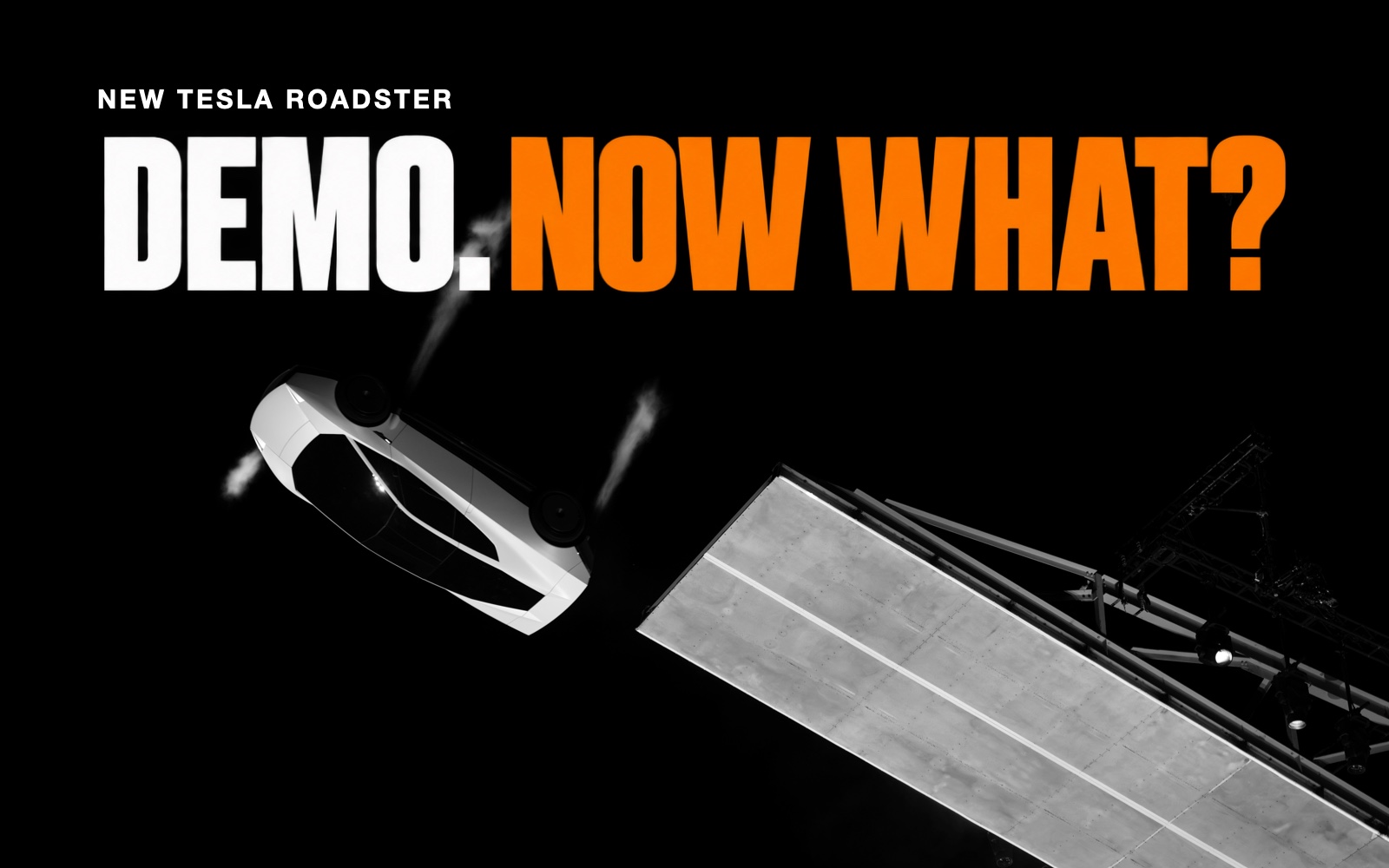
At its October 15 reveal, the demonstration included driving upside down on a ramp and maneuvering through the air with thrusters, according to Reuters’ event coverage. Fair enough. That gets your attention.
Our position: the demonstration deserves credit, but it does not establish what a customer vehicle can repeatedly deliver. Judge the configurations separately, and keep Tesla’s performance claims separate from independently verified results.
You can be impressed and still want the test sheet.
That is where this gets interesting for anyone who cares about driving, rather than simply winning an argument about Tesla.
The New Tesla Roadster Has Different Jobs to Do
Tesla’s current Roadster page separates Performance from the Thrust and Rocket upgrades. Here is what the company advertises, with availability language that should not be mistaken for completed deliveries.
| Configuration | Seats | Advertised hardware | Availability or use wording |
|---|---|---|---|
| Performance | Two | Active aero and suction system | By reservation; described as road ready |
| Thrust | Two | Suction system and rear cold-gas thrusters | Limited release; described as race ready |
| Rocket | One | Suction system and perimeter thrusters | Invitation only; not approved for public-road use |
Those distinctions matter. A clip of the most extreme configuration cannot tell you everything about the version someone might actually drive.
Tesla also qualifies the presentation with Rocket-only features and a note tying the page’s specifications to the optional Thrust upgrade. Read the footnotes before treating a headline feature as standard equipment.
For prospective buyers, that makes a configuration-specific equipment list essential. The exciting video gets you interested. The details tell you what you are considering.
The Acceleration Claim Needs Its Test Conditions
Tesla advertises 0–60 mph in under one second for Thrust. That remains a manufacturer claim; the sources checked for this article do not independently verify it.
It deserves scrutiny precisely because it is so ambitious.
For a meaningful comparison, we would want the timing method, surface, tires, vehicle configuration and preparation disclosed. We would also want to know whether the result can be repeated without an elaborate reset between attempts.
Those are questions, not accusations that the car cannot do it. A test that answers them would be far more persuasive than another argument conducted beneath a video.
There is also acceleration as an event, and acceleration as part of driving. What happens when you lift, brake, turn and ask the car to settle? Can a driver confidently approach the limit, or does the headline number dominate the entire experience?
For this audience, those answers belong beside the stopwatch.
Enthusiasts Have Room for Excitement and Doubt
The r/cars reaction to the reveal contains both genuine excitement and doubts about how representative the demonstration is of a production vehicle. Some commenters admire the engineering while questioning whether the eventual car will deliver the same experience.
That is a perfectly reasonable place to stand.
Enthusiast cars do not have to justify themselves with cargo space and sensible running costs. Plenty of us have defended a project that makes no financial sense because building or driving it makes us happy. An ambitious machine deserves room to be ambitious.
But enthusiasm cannot answer an ownership question. Neither can a reflexive eye roll.
The useful discussion starts when we stop making people choose between applauding the engineers and asking what happens after the cameras leave. You can appreciate the accomplishment without giving every future promise a free pass.
The Driving Questions Still Matter
For a track-focused buyer, our first question would be repeatability. We would want independent running over a complete session, with preparation and interruptions documented, rather than only a carefully selected highlight.
Then comes access. What facilities will permit each configuration and operating mode? What training, inspections or support will an owner need? Until those answers are documented, assuming your usual track-day booking covers everything would be premature.
For someone interested in the road version, the questions become more familiar. How does it ride over broken pavement? How easy is it to place on a narrow road? Is the steering satisfying when you are nowhere near maximum attack?
Anyone shopping for a serious performance car should care about those things. They determine whether you look forward to another drive or merely another opportunity to demonstrate its party trick.
A great sports car should have something to offer after the launch is over. We want to know whether this one does.
Production Is Targeted for 2028
Tesla Roadster production has a stated target: 2028, according to Reuters’ reporting from the reveal. That report also says executives did not announce target sale prices at the event.
A production target is useful information. It is not a guaranteed delivery appointment.
Being able to demonstrate a capability, accept reservations and support owners through years of use are separate milestones. Each deserves evidence on its own terms.
Before committing money, we would want clarity about the exact vehicle being reserved, the conditions attached to the payment and the support available after delivery. An owner should not have to assemble those answers from forum comments.
We would also resist importing older Tesla Roadster specs into the new discussion without checking their applicability. Familiar figures can survive online long after a product description changes.
The strongest future update would be straightforward: an independently tested car representative of what customers will receive, with its equipment, restrictions and operating requirements clearly identified.
Quick Answers
Can the new Tesla Roadster fly?
Tesla describes airborne capability for Rocket, which its page says is not approved for public-road use. That does not establish the same capability for every customer configuration.
How fast is the new Tesla Roadster?
Tesla claims under one second from 0–60 mph for Thrust. Independent confirmation and disclosed test conditions are needed before treating that as a verified comparison figure.
When will the new Tesla Roadster enter production?
Tesla announced a 2028 production target, as reported by Reuters. That does not establish a guaranteed delivery date for an individual customer.
How much will the new Tesla Roadster cost?
Reuters reported that Tesla did not announce target sale prices at the reveal. A reservation payment should not be treated as the vehicle’s final purchase price.
Our Take
Give the engineering its attention. Then ask to drive the car.
We want ambitious performance projects to exist, and we want manufacturers to answer ordinary enthusiast questions about them. Independent testing, clear specifications and actual ownership experience would move this conversation forward.
Until then, the Roadster is an intriguing proposition with important questions still open. Enjoy the spectacle. Keep asking what comes with the keys.
Which would tell you more about the new Roadster: an independently timed launch, a full track session or a week of ordinary road driving—and why?