
Overlanding vs Car Camping: Does Your Weekend Count?
A short trip, a reserved campsite, and the vehicle you already own. Where does camping become overlanding—and when does the distinction stop being useful?
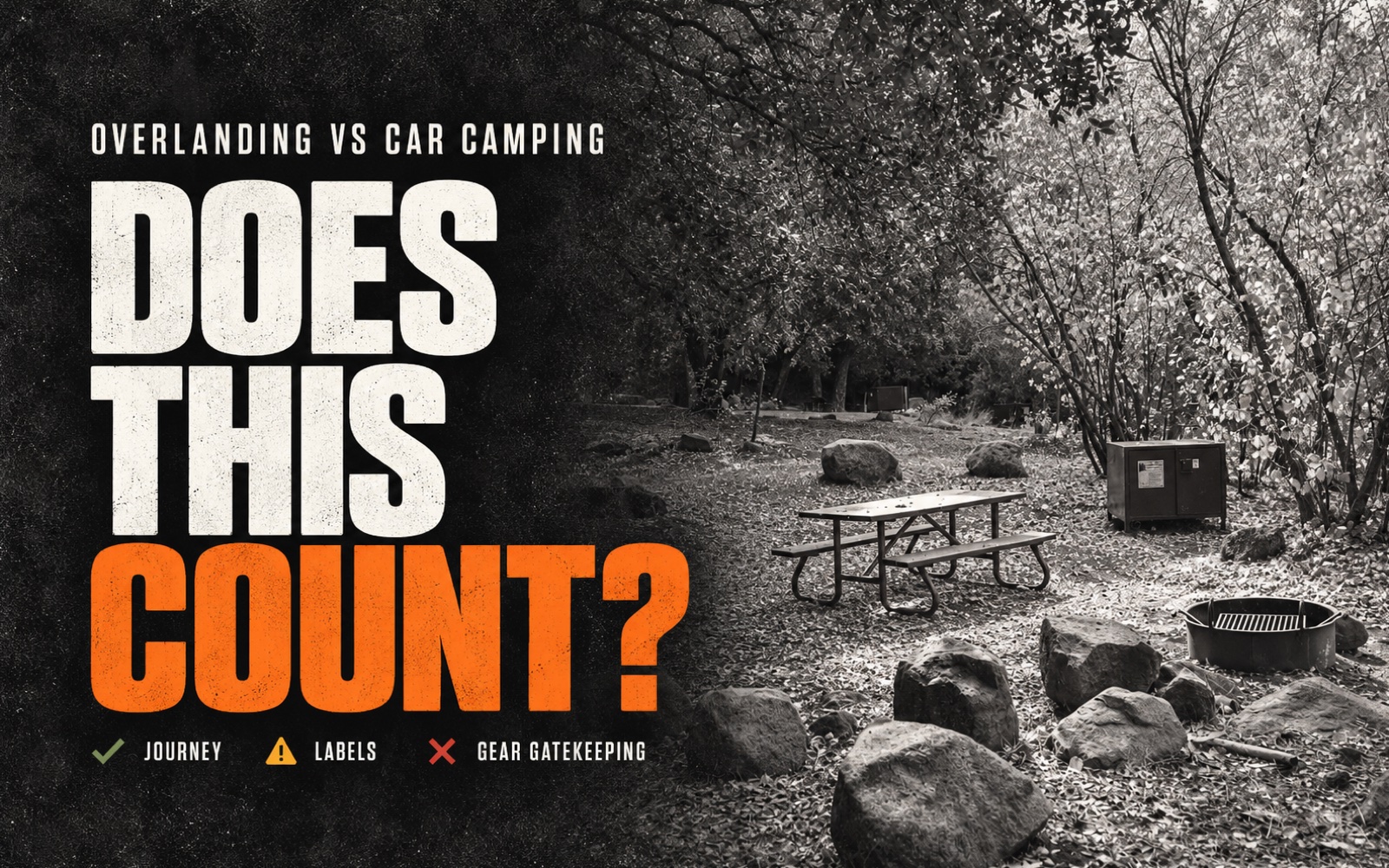
You’ve packed the vehicle, found somewhere legal to camp, and finally cleared a weekend. Then somebody looks at the picnic table in your photo and decides the trip doesn’t count.
Apparently, the campsite needs a credentials department.
The useful distinction in overlanding vs car camping is the purpose of the trip: overlanding centers on self-reliant travel and exploration; car camping centers on staying somewhere with your vehicle nearby. Our view: a short trip can fit either description, and neither label makes it a better use of your weekend.
There is a meaningful difference. There is also a point where discussing it becomes more work than packing the tent.
Overlanding vs Car Camping Starts With the Journey
Overland Journal describes overlanding as self-reliant adventure travel to remote places, with the journey as the main goal. Its explanation explicitly includes a weekend trip 100 miles from home alongside much longer expeditions, and allows equipment to be simple or elaborate.
That’s an editorial definition worth using, not a licensing requirement.
For planning purposes, ask what you’re going out there to do. Explore a route and camp along the way? Settle beside a lake? Spend the day working through technical obstacles? Those plans can overlap, but they create different priorities.
| Trip style | Main focus | What drives preparation |
|---|---|---|
| Car camping | Time at the campsite | Campsite access and comfort |
| Trail riding | Driving the trail | Terrain and vehicle capability |
| Overlanding | Travel and exploration | Route, supplies, and self-reliance |
Treat those as descriptions you can explain to a friend. Nobody needs to inspect your roof rack before accepting the invitation.
The Community Debate Has More Than One Reasonable Side
A recent r/overlanding discussion about whether a one-night trip counts brought out the familiar split. Some members drew a distinction between traveling and camping. Others said enjoying the trip mattered more than its name. The original poster also clarified that the question was largely satirical.
So, no, this wasn’t evidence of some enormous civil war.
The strongest argument for keeping the definition is practical. Invite somebody “overlanding,” and they may expect movement, route planning, and a degree of independence. If you mean parking beside a bathhouse all weekend, “camping” probably communicates the plan better.
The strongest argument against policing the term is equally fair: a label becomes unhelpful when it turns into a judgment about who belongs.
You can explain what a trip involves without sneering at somebody’s first night outdoors. You can also call your own trip camping without treating that as a confession.
A Reserved Campsite Can Still Require Self-Reliance
For Northeast readers, a useful example is Pennsylvania’s Bald Eagle State Forest. DCNR lists 45 roadside campsites across 194,000 acres, including remote sites along dirt and gravel forest roads.
These are designated places to camp. They also lack electric hookups, dump stations, and trash disposal. Having a reservation doesn’t mean somebody else has handled your supplies or your cleanup.
DCNR requires permits and reservations for motorized roadside camping there. Equipment suitability varies by site, so check the individual listing before assuming your vehicle or trailer fits.
Notice that this example is a state forest. Don’t transfer its rules to a state park—or assume every public campsite operates the same way.
The broader point is simple. “Designated” and “self-sufficient” can coexist. Judge a stop by its actual facilities and access, then plan accordingly.
A shower stop during a longer journey doesn’t erase the journey. Nor does the absence of a shower automatically turn a camping weekend into an expedition.
Your Gear Explains Your Needs, Not Your Credentials
A rooftop tent can be convenient. A ground tent can suit you perfectly. Sleeping inside the vehicle might be the arrangement that gets you out the door with the least fuss.
Choose based on the trip you want to take and the inconveniences you’re willing to tolerate.
Some people enjoy building an elaborate camping setup as much as using it. Fair enough. We understand spending an evening in the garage because getting something just right is its own reward.
The trouble starts when personal preference gets sold as an entry requirement.
Good advice on overlanding for beginners starts with the proposed route, weather, sleeping arrangement, supplies, and what happens if plans change. A photo of somebody else’s build cannot answer those questions for you.
The same judgment applies to street cars: modifications ought to serve the experience you want. There’s room for a carefully developed project and a mostly stock vehicle that gets used constantly.
Plan the Weekend You Actually Have
Weekend overlanding doesn’t need to imitate somebody else’s extended trip.
Say plainly what you want: a scenic route with camping along the way, a trail day followed by a comfortable base camp, or quiet time beside the vehicle. That makes it easier to choose companions and prepare for the same experience.
Be honest about the limits, too. A free weekend doesn’t oblige you to squeeze in a difficult route, a remote campsite, and a pile of new equipment you haven’t used.
For state park camping, check that particular park’s rules and facilities. For forest travel, check the responsible land manager’s access information. Permission to camp somewhere doesn’t establish permission to drive every track nearby.
Build confidence through trips you can manage. Adjust what bothered you afterward. If the weekend taught you that your sleeping setup needs work, that is useful information, regardless of what you called the trip.
Quick Answers
What is the difference between overlanding and car camping?
Overlanding emphasizes self-reliant travel and exploration. Car camping emphasizes staying at a campsite with your vehicle nearby. The same trip can include both.
Can a one-night trip count as overlanding?
Yes, under the journey-focused definition used here. Its purpose and character matter more than simply counting nights; a short stay at a fixed campsite can also be perfectly good camping.
Can you overland and stay in a state park?
A state-park stop can form part of a longer journey. The stop alone doesn’t define the whole trip, and you still need to follow that park’s rules.
Do you need expensive gear to start overlanding?
An expensive setup isn’t part of Overland Journal’s definition. Your equipment should suit your route, conditions, and needs rather than somebody else’s idea of the correct appearance.
Our Take
Keep the distinction if it helps you describe and prepare for a trip. Drop the superiority that sometimes gets attached to it.
Camping doesn’t need a promotion. Overlanding doesn’t need to cover everything involving a vehicle and a sleeping bag.
What matters is giving yourself a realistic chance to enjoy the time outside, respecting the place, and learning enough to make the next trip better. If you got that from a nearby campground, the weekend did its job.
When you plan a weekend with your vehicle, is the main event exploring the route or settling into camp—and does that change what you call it?